

 See My Latest Article on HelloNation
What Is Glaucoma and Why Does It Matter in Racine, WI?
Glaucoma refers to a group of eye conditions that damage the optic nerve, often linked to higher pressure inside the eye (intraocular pressure). This is especially important for residents in Racine, WI, where weather changes, aging populations, and access to regular eye care can influence eye health. If left untreated, glaucoma can cause permanent vision loss. Because many early cases show no noticeable symptoms, it is sometimes called the “silent thief of sight.”
How Does Glaucoma Develop and Who Is Most at Risk?
Glaucoma most commonly develops when the fluid that flows through the inside of the eye (called aqueous humor) doesn't drain as it should, leading to increased pressure. This pressure can gradually damage the sensitive optic nerve fibers responsible for vision.
Risk factors for residents in the Racine area include:
- Age: People over 60 are at higher risk, which is especially relevant as older adults make up a significant portion of area households.
- Family History: Genetics play a strong role—those with close relatives affected by glaucoma should be particularly attentive.
- Medical Conditions: Diabetes, high blood pressure, and certain other health issues, all common in the Midwest, can raise the risk.
- Prolonged Corticosteroid Use: Long-term use of medications like steroid eye drops can increase susceptibility.
Some types of glaucoma can develop suddenly, but most progress slowly, underscoring the value of routine eye checks.
What Are the Early Signs and Common Symptoms?
The most common form, open-angle glaucoma, often has no overt warning signs until vision loss is advanced. Residents in Racine, like elsewhere, may not notice any difference in sight until significant damage has occurred.
However, possible symptoms in more advanced stages include:
- Patchy blind spots in the peripheral (side) or central vision
- Tunnel vision in advanced stages
Less common forms, such as angle-closure glaucoma, can present more abruptly with symptoms like:
- Severe eye pain or headache
- Nausea or vomiting
- Blurred vision
- Halos around lights
- Redness in the eye
These symptoms require urgent medical attention, as they can rapidly result in permanent vision loss.
How Is Glaucoma Diagnosed in the Community?
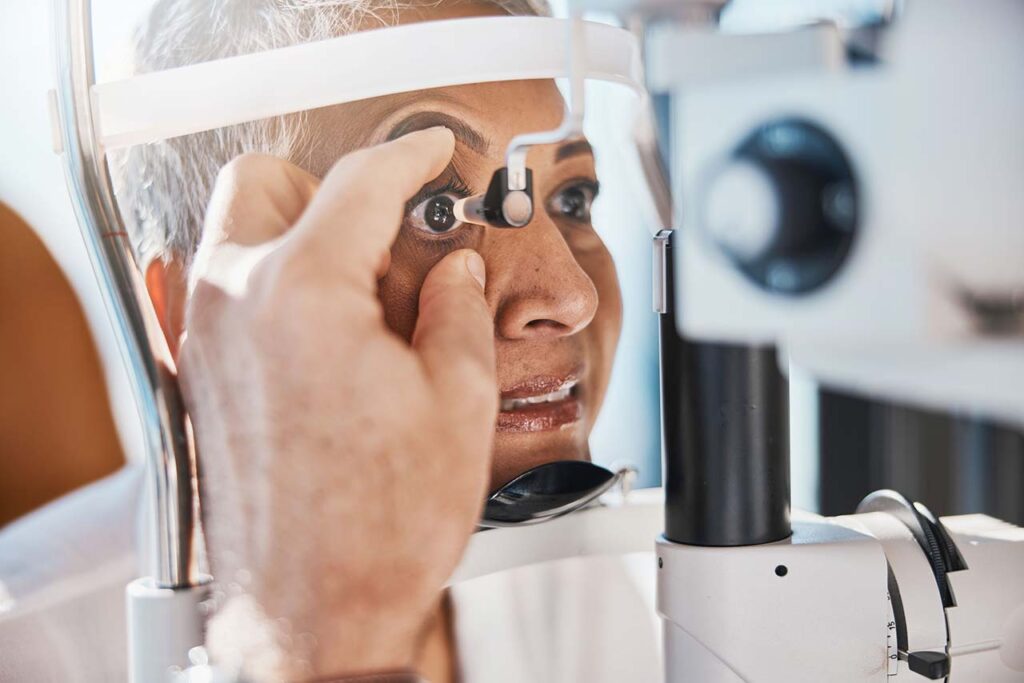
Glaucoma diagnosis involves measuring eye pressure, examining the optic nerve, checking visual fields, and sometimes measuring corneal thickness. In Racine, routine comprehensive eye exams are the main way most cases get detected, since self-diagnosis is not reliable, and symptoms can be absent until damage is significant.
Eye care providers use tools such as:
- Tonometry to measure eye pressure
- Dilated eye exams to inspect the optic nerve
- Visual field tests to detect subtle vision loss
Because vision changes from glaucoma happen gradually, early detection through periodic eye checks—especially for older adults or higher-risk individuals—is critical.
What Causes Confusion or Misunderstanding About Glaucoma?
A frequent misconception among Racine residents is that increased eye pressure is the only factor leading to glaucoma. Not every person with high eye pressure develops the disease, and some people with normal pressures experience optic nerve damage.

Other misunderstandings include:
- Thinking glaucoma always causes pain—most cases are painless.
- Assuming loss of vision from glaucoma can be reversed—damage is generally permanent but can be slowed or stopped with treatment.
Staying informed helps area households recognize when testing and ongoing monitoring are needed, even in the absence of obvious symptoms.
What Treatment Options Exist and How Do They Help?
Glaucoma treatments aim to lower intraocular pressure to prevent or slow down further optic nerve damage. While treatments available in Racine align with national medical standards, following through with prescribed therapies is key to success.
Treatment options include:
- Prescription eye drops—often the first-line therapy to reduce eye pressure
- Oral medications—sometimes used if drops alone are insufficient
- Laser therapy—minimally invasive procedures can improve fluid drainage
- Surgery—procedures to create new drainage channels for the eye fluid, used in more resistant cases
Treatment plans are tailored to each individual’s severity, health status, and response to therapy. Regular follow-up is necessary, as adjustments may be required to control eye pressure over time.
How Can Residents in Racine, WI Protect Their Vision?
Preventing vision loss from glaucoma depends largely on early detection and ongoing management. Community members can:
- Schedule routine eye exams as recommended, particularly after age 40 and more frequently after 60 or if there is a family history.
- Report any sudden changes in vision, pain, or unusual symptoms promptly.
- Keep chronic medical conditions like diabetes and high blood pressure under control.
- Discuss any medication side effects or concerns during healthcare visits.
Winter storms, shifting light conditions, and increased time spent indoors in Racine can make subtle vision changes harder to notice, so annual eye health checks become even more important during these times.
Awareness and proactive eye care are the most effective approaches for preserving healthy vision and independence throughout life.