

 See My Latest Article on HelloNation
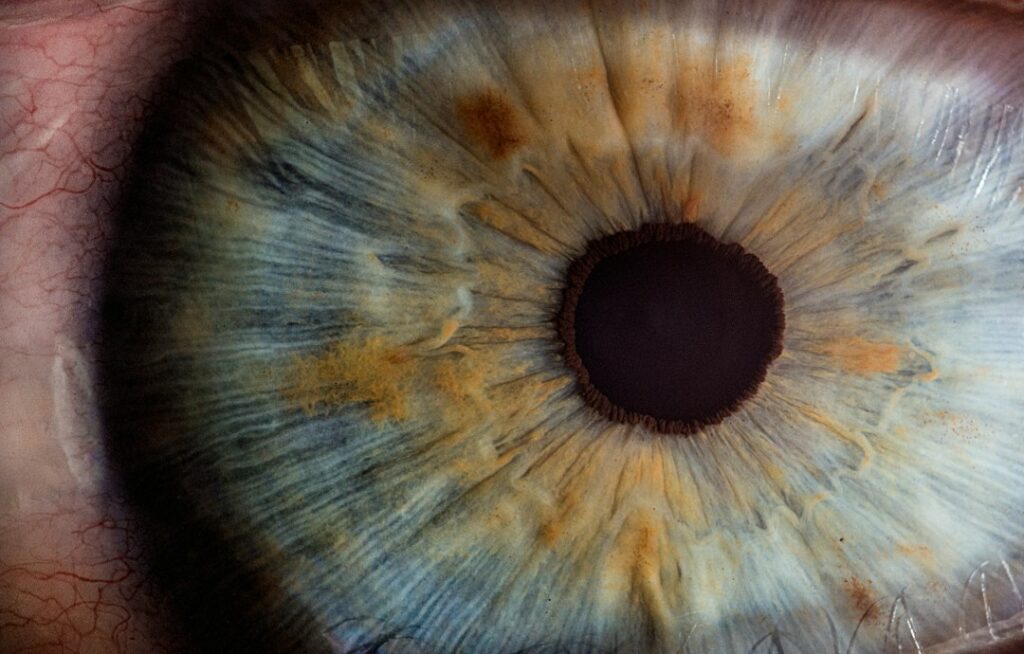
What should you do first if something gets in your eye?
If a small speck of dust, grit, an eyelash, or another loose particle enters the eye, wash your hands and avoid rubbing. The safest first step is usually gentle flushing with clean, lukewarm water. Many minor surface particles are removed by tears or irrigation, but forceful rubbing can scratch the cornea. ([mayoclinic.org](https://www.mayoclinic.org/first-aid/first-aid/basics/art-20056645?utm_source=openai))
In Racine, wind, road grit, home repairs, yard work, and winter debris can all make this problem more common at certain times of year. A particle that feels minor can still cause a corneal abrasion, especially if it is gritty, sharp, or trapped beneath an eyelid.
Remove contact lenses if they come out easily, particularly before or during flushing. A particle can remain stuck beneath a lens and continue irritating the eye. Do not force a lens out if the eye is severely painful or if removal is difficult. ([mayoclinic.org](https://www.mayoclinic.org/first-aid/first-aid/basics/art-20056645?utm_source=openai))
How do you flush a loose particle from the eye?
Use a gentle stream rather than high pressure.
- Wash hands with soap and water.
- Hold the eyelids open and let clean, lukewarm water flow across the eye.
- Blink repeatedly while rinsing.
- A clean cup or eyewash container may be used if it has not touched the eye or surrounding skin.
- In a shower, water can run gently over the forehead and across the affected eye.
- If helping someone else, use good lighting and ask the person to look up and down while the eye is rinsed.
Do not use tweezers, fingernails, cotton swabs, or other tools on the eye. Do not place medication, ointment, saliva, or household substances in the eye unless specifically directed by a medical professional.
If the object is visible on the white part of the eye and floats freely, flushing may remove it. A particle stuck on the clear front surface of the eye, under the eyelid, or in the colored part of the eye should not be picked out at home.
What if the object will not come out?
Stop trying to remove it if flushing does not work. Continued attempts can enlarge a scratch or push the material deeper into the cornea.
A persistent “something is still in my eye” feeling does not always mean the particle remains. The cornea may have been scratched, and that sensation can continue for several hours or up to about a day after the object is gone. Ongoing pain, redness, tearing, light sensitivity, or blurred vision should be assessed because these symptoms can indicate a corneal injury or retained foreign body. ([mayoclinic.org](https://www.mayoclinic.org/first-aid/first-aid/basics/art-20056645?utm_source=openai))
An eye surgeon or other qualified eye-care clinician may need to examine the surface under magnification and safely remove material that is embedded or hidden under an eyelid. Removing a corneal foreign body is generally performed in a clinical setting rather than with household tools. ([eyewiki.aao.org](https://eyewiki.aao.org/Removal_of_Corneal_Foreign_Bodies?utm_source=openai))
When is an object in the eye an emergency?
Seek immediate emergency medical care for any of the following:
- Sudden vision loss, double vision, or a significant change in vision
- Severe or worsening pain
- An object that appears embedded, protrudes from the eye, or cannot be moved
- A cut or puncture near the eye
- Blood inside the visible portion of the eye
- A misshapen pupil or unusual change in the eye’s appearance
- Injury from grinding, drilling, hammering, mowing, or another high-speed activity
- A metal fragment, glass shard, or sharp piece of wood
- Inability to open the eye because of pain or light sensitivity

Do not pull out an embedded object. Do not apply pressure or use a regular eye patch over a suspected penetrating injury. A rigid protective shield may be appropriate while urgent care is arranged, but the eye itself should not be pressed. Suspected open-globe injuries require rapid evaluation. ([eyewiki.aao.org](https://eyewiki.aao.org/Pre-Ophthalmologist_Management_of_Eye_Trauma?utm_source=openai))
If a metal fragment may have entered the eye at high speed, mention that detail clearly. The speed and mechanism of injury help determine whether a deeper foreign body may be present. ([eyewiki.aao.org](https://eyewiki.aao.org/Intraocular_Foreign_Bodies_%28IOFB%29?utm_source=openai))
What should you do after a chemical splashes into the eye?
A chemical exposure is different from an ordinary speck of dust and should be treated as an emergency. Begin rinsing immediately with large amounts of clean water or saline. Do not delay irrigation while looking for a special solution or trying to identify the product.
Keep the eyelids open, blink during rinsing, and continue flushing while emergency medical help is being arranged. If contact lenses are present, remove them during the rinse if they come out easily. Do not try to neutralize an acid with an alkaline substance, or an alkaline substance with an acid; that can cause additional damage. ([eyewiki.aao.org](https://eyewiki.aao.org/Chemical_%28alkali_and_acid%29_injury_of_the_conjunctiva_and_cornea?utm_source=openai))
Common household and work-related sources include cleaning products, drain chemicals, solvents, garden products, and construction materials. Bring the container or product information if it can be done safely, but do not stop rinsing to search for it. Alkaline substances, including lye and some drain cleaners, can penetrate eye tissues deeply and may cause lasting damage. ([eyewiki.aao.org](https://eyewiki.aao.org/Chemical_%28alkali_and_acid%29_injury_of_the_conjunctiva_and_cornea?utm_source=openai))
If a chemical also caused a cut or puncture, avoid forceful irrigation and do not press on the eye. A penetrating injury requires urgent, case-specific medical management. ([eyewiki.aao.org](https://eyewiki.aao.org/Pre-Ophthalmologist_Management_of_Eye_Trauma?utm_source=openai))
Can you sleep after rinsing the eye?
If the particle flushed out and vision is normal, mild watering or irritation may settle with time. However, sleep should not be used to ignore warning signs. Pain that persists, increasing redness, light sensitivity, discharge, or any visual change warrants medical assessment rather than continued home treatment.
Contact lens wearers should be particularly cautious. Even a small scratch can become infected, and wearing lenses over an irritated or injured cornea can delay healing. Leave the lens out until the eye has returned to normal or a clinician has advised otherwise.
How can eye injuries be prevented?
Protective eyewear is useful during tasks that produce flying particles, including cutting, drilling, grinding, hammering, yard work, and home maintenance. Ordinary prescription glasses may not provide adequate side protection.
During colder months, grit and wind can increase eye irritation outdoors, while dry indoor air may make the eyes more vulnerable to discomfort from small particles. Keeping clean water available, storing chemicals securely, and avoiding loose debris around children can reduce avoidable injuries in area households.
The key distinction is simple: flush loose material, never rub or pick at the eye, and treat chemical splashes, embedded objects, high-speed impacts, and vision changes as urgent problems.