

 See My Latest Article on HelloNation
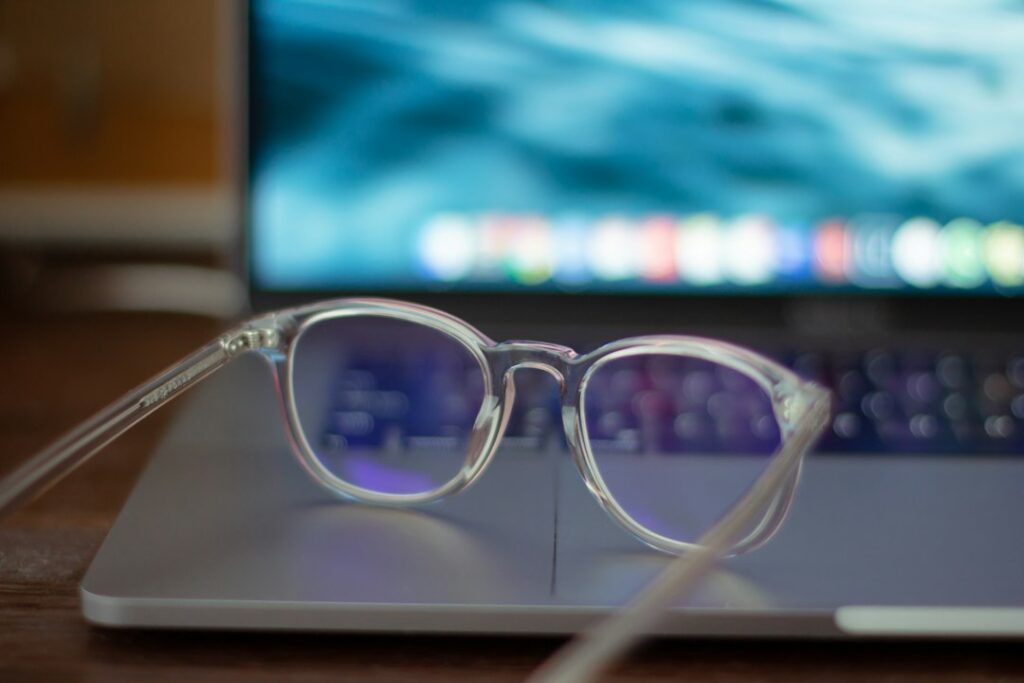
Are blue light glasses necessary for screen use?
Usually, no. Blue light glasses are not required to use a computer, tablet, phone, or television safely. Current evidence does not show that the blue light from ordinary digital screens damages healthy human eyes or causes age-related macular degeneration.
Blue light is a portion of visible light with relatively short wavelengths. It comes from the sun as well as indoor lighting and digital devices. Blue-light-filtering lenses are designed to reduce the amount of some blue wavelengths entering the eye, but products differ substantially in how much light they filter.
For local residents who spend long hours indoors during cold weather, the more common sources of eye discomfort are prolonged near focusing, reduced blinking, dry indoor air, glare, poor screen positioning, and an outdated prescription—not blue light itself.
Can blue light glasses reduce digital eye strain?
They may feel comfortable for some people, but research has not shown a consistent reduction in digital eye strain compared with ordinary clear lenses. A large review of controlled clinical trials found little or no short-term benefit for symptoms such as tired eyes, blurred vision, headaches, or discomfort during computer use.
Digital eye strain is real. Its causes often include:
- Staring at a close screen for extended periods
- Blinking less frequently while reading or concentrating
- Reflections or glare on the display
- Screen brightness that does not match the surrounding room
- Poor viewing distance or posture
- Dry eyes, seasonal irritation, or contact lens discomfort
- Uncorrected or outdated vision needs
A person may feel better while wearing blue light glasses because the lenses reduce glare, have an anti-reflective coating, provide a comfortable tint, or happen to be paired with a more accurate prescription. Those effects are different from proving that blue light filtering itself prevents eye strain.
Do blue light glasses protect the retina?
There is no good evidence that blue-light glasses protect the retina from damage caused by normal computer or phone use. Laboratory studies involving intense light exposure can show biological effects, but those conditions do not reflect ordinary screen viewing in a home, office, classroom, or vehicle.
The retina is naturally exposed to blue light from daylight. The amount emitted by common consumer screens is much lower than direct sunlight. Sunglasses with ultraviolet protection are useful outdoors, but blue-light-filtering glasses should not be viewed as a substitute for proper sunglasses or general eye protection.
People with known retinal disease, significant light sensitivity, or special medical concerns may receive individualized advice about light exposure. That is a separate question from whether most screen users need blue-light lenses.
Can they improve sleep?
Blue light in the evening can influence the body’s internal clock, particularly when the light is bright and a screen is viewed close to bedtime. However, studies of blue-light-filtering prescription lenses have not consistently shown that they improve sleep quality.
The practical issue is often broader than wavelength. Evening screen use may keep the brain alert, delay bedtime, encourage stimulating activity, and expose the eyes to bright light when the body is preparing for sleep.
Helpful alternatives include:
- Lowering screen brightness in the evening
- Using a warmer display setting or night mode
- Reducing screen use during the hour or two before bed
- Keeping the bedroom dark and maintaining a regular sleep schedule
- Avoiding bright screens held close to the face at night
Someone who notices better sleep while wearing tinted lenses may be responding to reduced brightness or a personal comfort effect. That experience can be genuine without proving that the glasses provide a general medical benefit.
Are there drawbacks or risks?
For most people, blue-light glasses are unlikely to cause serious harm when the lenses are properly made and used as intended. Still, several limitations deserve attention.
A noticeable yellow, amber, or orange tint can alter color perception. This may matter for people who work with photographs, design, art, lighting, electronics, safety signals, or color-coded information. Some filters may also make screens appear less natural or reduce visual comfort rather than improve it.

Other possible problems include:
- Paying extra for a feature with uncertain benefit
- Assuming the glasses replace an accurate prescription
- Using them to continue excessive screen exposure without breaks
- Choosing lenses that create reflections, distortion, or visual imbalance
- Wearing non-prescription lenses when headaches or blurred vision actually signal a vision problem
A blue-light coating is also not the same as an anti-reflective coating. Glare reduction may be more relevant to comfort, especially near windows, bright lamps, or reflective surfaces.
What helps digital eye discomfort more reliably?
Simple changes often address the main causes of screen-related symptoms.
Keep the screen about an arm’s length away, with the top of a computer monitor near eye level. Text should be large enough to read without leaning forward. Adjust brightness so the display is not dramatically brighter or darker than the room.
Use the 20-20-20 approach: every 20 minutes, look at something about 20 feet away for at least 20 seconds. The purpose is to relax near focusing and encourage regular blinking.
During winter, heated indoor air can make the eyes feel dry. Humidifying the room appropriately, avoiding direct airflow toward the face, taking blink breaks, and using properly selected lubricating drops when needed may be more useful than filtering blue light. Contact lens wearers may notice symptoms sooner and may need shorter screen sessions.
Outdoor time also gives the eyes a break from sustained near work. On bright days, sunglasses that block ultraviolet radiation are more relevant for outdoor comfort and protection than blue-light glasses worn indoors.
When should symptoms be checked?
Temporary tiredness after a long screen session is common, but persistent or worsening symptoms deserve attention. An eye evaluation is reasonable if headaches, fluctuating vision, burning, dryness, double vision, or difficulty focusing continue despite improving screen habits.
Urgent medical attention is appropriate for sudden vision loss, a sudden increase in flashes or floaters, a curtain-like shadow, severe eye pain, marked redness with light sensitivity, or new double vision.
These symptoms should not be attributed automatically to blue light. They may relate to dry eye, an uncorrected prescription, migraine, inflammation, retinal problems, or another condition that blue-light glasses cannot treat.
What is a sensible choice for residents?
Blue-light glasses are optional rather than essential. If a person likes the tint, finds the lenses comfortable, or prefers them as part of a regular pair of glasses, there may be no reason to avoid them. Their benefits should simply be described modestly.
They should not be purchased with the expectation that they will prevent retinal disease, eliminate digital eye strain, or guarantee better sleep. For most households, screen positioning, glare control, regular breaks, adequate blinking, accurate vision correction, and healthier evening routines offer a more evidence-based approach.